Pickling in metal processing: why is it important?
In the metal industry, pickling is an important step for freeing surfaces from contamination and corrosion layers. Chemical agents are used to remove rust, scale, greases or oils that have arisen during previous processing steps or through storage.
Without pickling, further processing steps on the workpiece, such as electroplating or galvanising, could not achieve the desired effect. A clean surface is always the basic prerequisite for successful surface treatments. Alternative cleaning methods are grinding, brushing, blasting or degreasing.
Pickling usually takes place after long storage or after a heat treatment. In these processes, various deposits can form in layers. Pickling is
also used after welding or soldering. For example, it can free a weld seam of heat tint.
Deposits on metal surfaces
Metals react with oxygen. This leads to corrosion. Noble metals corrode more slowly than base metals such as iron, aluminium or zinc. The deposits on metal surfaces are therefore mostly oxide compounds such as iron oxide, aluminium oxide, magnesium oxide or carbon dioxide.
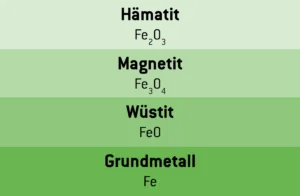
Oxide layers using iron as an example
These deposits can have a negative effect on the properties of the metal surfaces, such as conductivity or the adhesion tendency. They also promote further corrosion.
These deposits must be removed before further processing steps, as otherwise neither a uniform layer build-up nor sufficient adhesive forces can be guaranteed.
The formation of deposits is not always apparent during production. To avoid unpleasant surprises in later use, a preventive surface treatment is therefore recommended to ensure high quality.
Removal of passive and oxide layers
A passive layer on the metal surface is actually desirable. This non-metallic layer, only a few
nanometres thick, protects the surface from contact with the air and thus from oxidation and corrosion.
For further processing, however, the passive layer must be removed, for example by pickling with a weak acid or electrolyte solution. In metal processing this is known as activation. The composition of the solution is important in order to promote the renewed formation of a passive layer.
Pickling process
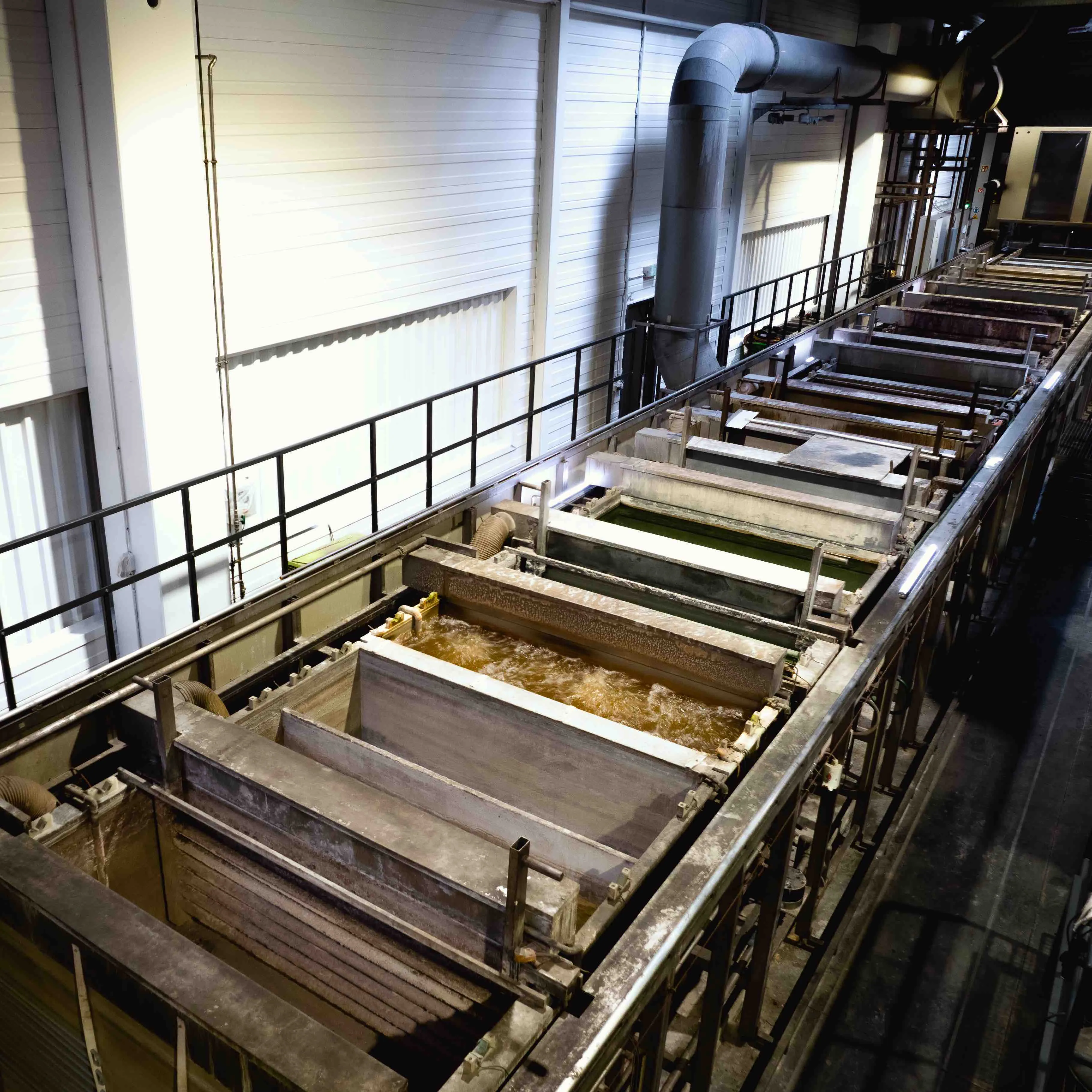
Pickling detaches oxide layers and contamination from the metal surface through chemical and physical processes. For this purpose, the workpiece is sprayed with the pickling liquid, brushed on or immersed in a pickling bath, if necessary supported by electrochemical processes.
Pickling can be divided into the following three phases:
● Phase 1: The pickle penetrates all oxide layers through cracks and pores and dissolves the easily soluble layers.
● Phase 2: As the easily soluble layers decompose, the less soluble layers lose stability.
● Phase 3: The pickling liquid reaches the base metal and reacts with it. Hydrogen is released in the process. The remaining oxide layers dissolve completely. Particular care must be taken to prevent hydrogen embrittlement.
Composition of the pickling solution
Depending on the thickness of the oxide layer and the surface requirements, different mineral acids and concentrations are suitable for pickling. The base material must also be taken into account when making the selection.
The following table shows guide values for the acid concentration and treatment temperature:
| Pickling solution | Concentration | Temperature |
|---|---|---|
| Hydrochloric acid | 15–20 % | Approx. 20 °C |
| Sulphuric acid | 10–30 % | Approx. 50–100 °C |
| Phosphoric acid | 10–20 % | Approx. 40–60 °C |
Choosing the right acid for metal pickling
Concentrated hydrochloric acid has an acid concentration of 37 %. It can be used at room temperature, produces bright pickled surfaces and evaporates quickly. It is suitable, for example, for dissolving scale.
Concentrated sulphuric acid has a concentration of 96 %. Smaller quantities are therefore sufficient than with hydrochloric acid. Sulphuric acid does not evaporate but is suitable for use at high temperatures. It is therefore often used in closed systems. Heat is generated when it is combined
with water. Dilute sulphuric acid can attack iron.
Concentrated phosphoric acid has a concentration of 80 %. Pickling with phosphoric acid is comparatively expensive and is generally only used to remove thin oxide layers. Phosphoric acid is very well suited to treating ferrous materials because a passivating iron phosphate layer forms.
Acid mixtures of different acids are also suitable for pickling low-alloy or non-alloyed steels.
Examples: pickling selected metals
The following examples illustrate pickling in practice.
Pickling ferrous materials
Pickling is used in the production of steel strip. During hot rolling of the strip, scale forms and must be removed before further processing. Two types of plant are suitable for this: the continuous pickling line or the push pickling line.
In the push pickling line, the steel strip coils are uncoiled, pushed into the plant and coiled up again. In the continuous pickling line, by contrast, the coil is uncoiled continuously and thus passed through the acid baths without interruption.
Afterwards, all acid residues are thoroughly rinsed off with water. Applying an alkaline solution helps to neutralise the acid and is intended to prevent corrosion. Oils also increase corrosion protection.
Pickling aluminium
Pickling is used on aluminium to increase the adhesion tendency and to prepare the
material for adhesive bonding. A pickling solution of
sulphuric acid, water and sodium dichromate is suitable for this. Alternatively, the less toxic
caustic soda can be used, for example if the component is later used in the
food industry.
Aluminium is also prepared for
electroplating with a pickling solution of nitric acid and hydrofluoric acid. The hydrofluoric acid is intended to dissolve silicon, which would have a negative effect on the
coating.
Pickling stainless steel
The chromium content of stainless steel protects the material from oxidation, because chromium automatically
forms a protective oxide layer on the surface. This effect is retained even if the surface is damaged.
Pickling is a good way to maintain the self-protection of stainless steel even under harsh conditions. It cleans the surface and thus restores the protective chromium oxide layer of stainless steel.
Pickling can help in the following cases:
- With flash rust or foreign rust during storage
- With the formation of chromium carbide due to the heat generated when drilling without lubricants
- With heat tint due to the heat generated during welding or grinding
- With scale layers caused by heat treatments
- With iron abrasion from tools
Pickling other metals
Pickling plays a role in electroplating, for example, to activate the base metal. The pickling of copper alloys (bronze, brass, etc.) is also known as bright dipping and is intended to produce a gloss effect.
Hazards of pickling solutions: the need for special disposal
Used pickling solutions pose serious risks to the environment and health. They are classed
as hazardous waste and must be disposed of accordingly. Disposal with general waste or
via the sewer system is strictly prohibited. As a rule, the packaging of the pickling agents already contains instructions for proper disposal. Regional rules and requirements for the disposal of hazardous waste may also apply.