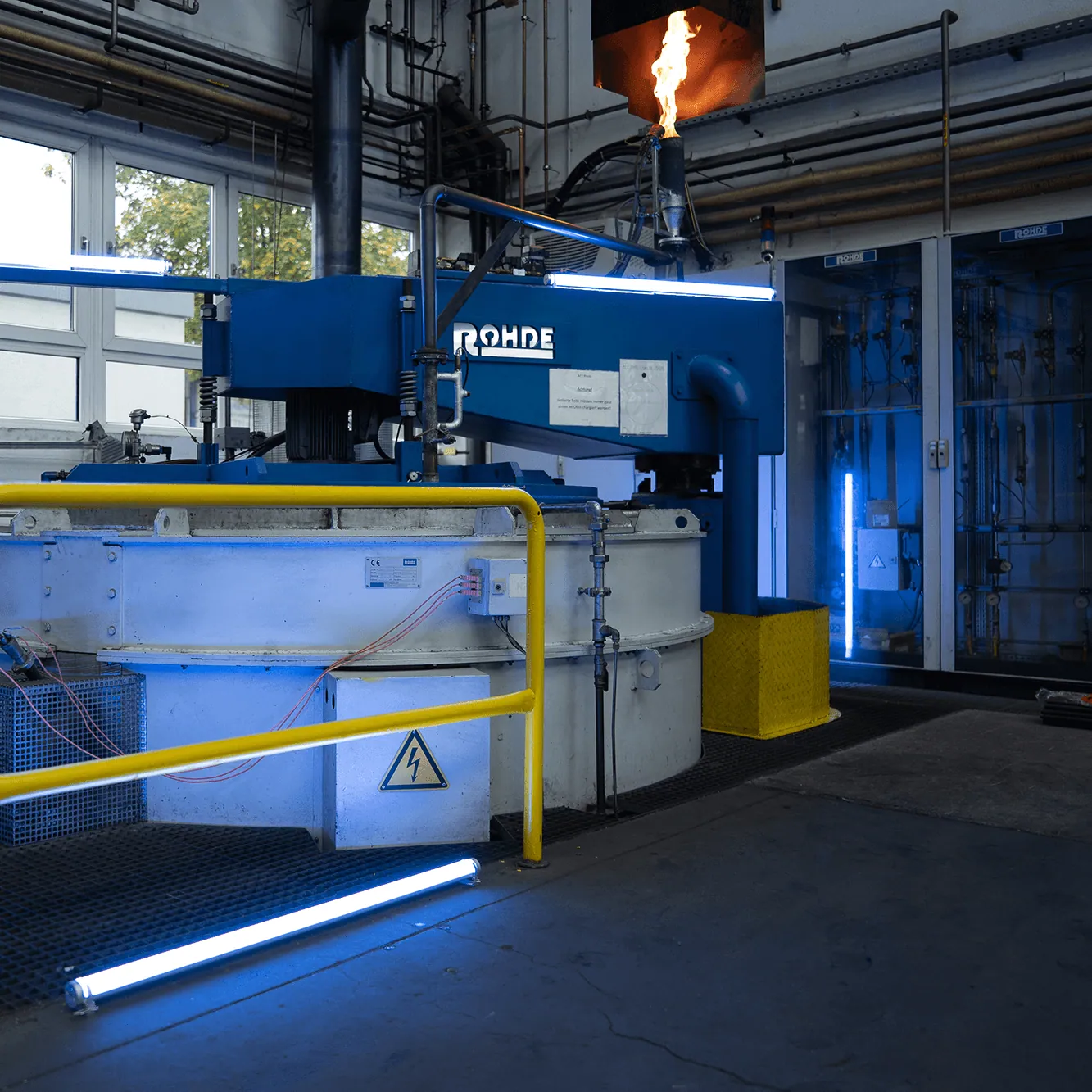
GKZ annealing
Prior hardening ensures a better distribution of the carbon, an important prerequisite for GKZ annealing. To minimise the risk of edge decarburisation or scaling, GKZ annealing is carried out in a protective gas atmosphere. Perfect control of the furnace technology can also prevent these risks.
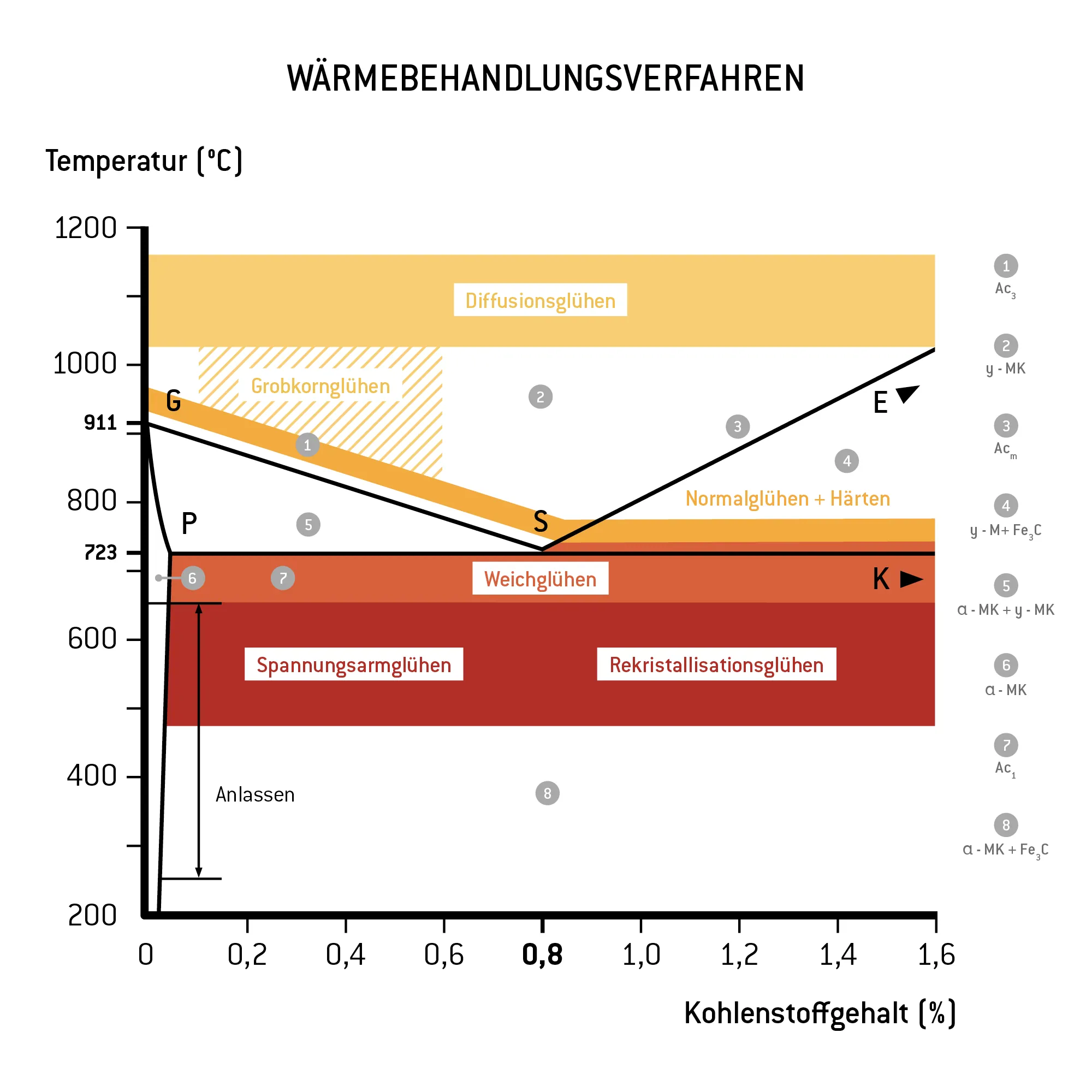
GKZ annealing
Difference between GKZ annealing and soft annealing
GKZ annealing is comparable to soft annealing. Both processes are heat treatments under a protective gas atmosphere to reduce hardness and enable cold forming. Machinability and the prerequisites for case hardening are also improved. The aim of GKZ annealing is spheroidal carbides embedded in the microstructure. Soft annealing, by contrast, produces spheroidal pearlite. In addition, longer holding times are usual for GKZ annealing – more than 8 hours is not unusual.
Advantages of GKZ annealing
- Spheroidal carbides and ductile ferrite offer ideal
deformability - Improved machinability
- Improved cold formability